Brief History: Canada is second largest country after Russia occupying most of the North-American continent. The original inhabitants were the Abroginal people. The first European landing in Canadian soil was an Italian reaching Nova Scotia in 1497. Slowly French and British started colonizing the area. The seven year war (1756-1763) and the treaty of Paris (1763) made the British victorious, governing the area. Canadian confederation came into effect by the British Parliament enacting North American Act in 1867. Upper and Lower Canada, Nova Scotia, and New Brunswick were the initial provinces joining the confederation. Manitoba, Alberta, Saskatchewan were later purchased from Hudson Bay Company. Prince Edward Island and British Columbia also joined the dominion. Newfoundland was the tenth province to join in 1949 with plebiscite. Referendum for independence held in 1995 in the French speaking state Quebec was narrowly rejected by the people.
What is the country known for:
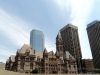
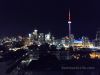
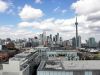
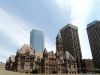
Defining the Toronto skyline is the CN Tower. At a height of 553.33 meters (1,815 ft, 5 in) it is the world's second tallest freestanding structure, an important telecommunications hub, and a centre of tourism in Toronto. Toronto is a city of high-rises, having over 2,000 buildings over 90 meters (300 ft) in height, second only to New York (which has over 5,000 such buildings) in North America.
Main Industries:
Transportation equipment, chemicals, processed and unprocessed minerals, food products, wood and paper products, fish products, petroleum and natural gas.
Agriculture - products: wheat, barley, oilseed, tobacco, fruits, vegetables; dairy products; forest products; fish
Main Trading Partners:
Exports - partners: US 82.3%, UK 2.2%, Japan 2.1% (2006)
Exports: $401.7 billion f.o.b. (2006 est.)
Exports - commodities: motor vehicles and parts, industrial machinery, aircraft, telecommunications equipment; chemicals, plastics, fertilizers; wood pulp, timber, crude petroleum, natural gas, electricity, aluminum
Imports - partners: US 55.1%, China 8.7%, Mexico 4% (2006)
Imports: $356.5 billion f.o.b. (2006 est.)
Imports - commodities: machinery and equipment, motor vehicles and parts, crude oil, chemicals, electricity, durable consumer goods
Location:
Northern North America, bordering the North Atlantic Ocean on the east, North Pacific Ocean on the west, and the Arctic Ocean on the north, north of the conterminous US.
Second-largest country in the world (after Russia); strategic location between Russia and US via north polar route; approximately 90% of the population is concentrated within 160 km of the US border.
Geographic coordinates: 60 00 N, 95 00 W
Size:
Total: 9,984,670 sq km (land: 9,093,507 sq km; water: 891,163 sq km)
Somewhat larger than the US
Time Zone: Canada uses six primary time zones. From east to west they are Newfoundland Time Zone, Atlantic Time Zone, Eastern Time, Central Time Zone, Mountain Time Zone, and the Pacific Time Zone. In most of Canada Daylight Saving Time begins at 2:00 a.m. local time on the second Sunday in March. On the first Sunday in November areas on Daylight Saving Time return to Standard Time at 2:00 a.m. During Daylight Saving Time turn your clocks ahead one hour.
Type of Government: A federation consisting ten provinces and three territories, Canada is constitutional monarchy and a parliamentary democracy. The British monarch remains the chief of state represented by governor-general.
The bicameral Parliament or Parlement consists of the Senate or Senat (105 seats; members appointed by the governor general with the advice of the prime minister and serve until reaching 75 years of age) and the House of Commons or Chambre des Communes (308 seats; members elected by direct, popular vote to serve four-year terms starting in 2009 elections)
Chief of state: Queen Elizabeth II; represented by Governor General Michaelle Jean
Head of government: Prime Minister Stephen Harper
National Holidays:
2010
1 Jan New Year's Day.
2 Apr - 5 Apr Easter.
24 May Victoria Day.
1 Jul Canada Day.
6 Sep Labour Day.
11 Oct Thanksgiving Day.
11 Nov Remembrance Day.
25 Dec - 26 Dec Christmas.
2011
1 Jan New Year's Day.
22 Apr - 25 Apr Easter.
23 May Victoria Day.
1 Jul Canada Day.
5 Sep Labour Day.
10 Oct Thanksgiving Day.
11 Nov Remembrance Day.
25 Dec - 26 Dec Christmas.
Population:
33,390,141 (July 2007 est.)
Age structure: 0-14 years: 17.3% (male 2,967,383/female 2,824,189)
15-64 years: 69.2% (male 11,604,723/female 11,490,839)
65 years and over: 13.5% (male 1,927,035/female 2,575,972) (2007 est.)
Life expectancy at birth: total population: 80.34 years (male: 76.98 years
female: 83.86 years)
Religion: Roman Catholic 43%, Protestant 23% (including United Church 10%, Anglican 7%, Baptist 2%, Lutheran 2%), other Christian 4%, Muslim 2%, none 16% (2001)
Language: English 59.3%, French 23.2% (both official); other 17.5%
Local Customs:
Canadians eat early and go home early. When you are invited to a Canadian's home you may be asked to arrive at 5.30pm or 6pm. You will find that most Canadians don't press you to eat more than you want.
When invited to their home, Canadian may ask you to remove your shoes.
Best time to go: Canada is a big country, it can be visited around the year. However, avoid winters which may be harsh.
Customs Regulations:
Cigarettes: You may bring in 200 cigarettes 50 cigars or cigarillos 200 grams (7 ounces) of manufactured tobacco, and 200 tobacco sticks.
Liquor: You may bring in one of 1.5 litres (50.7 US ounces) of wine, including wine coolers over 0.5 percent alcohol, or
1.14 litres (38.5 US ounces) of liquor, or
a total of 1.14 litres (38.5 US ounces) of wine and liquor, or
24 x 355 millilitre (12 ounce) cans or bottles of beer or ale, including beer coolers over 0.5 percent alcohol (a maximum of 8.5 litres or 287.4 US ounces).
Tipping:
10-15 per cent on meals - lower indicates dissatisfaction, higher indicates appreciation
$1 for each piece of luggage carried by a porter
$2 per day for chambermaids if your hotel stay is for more than two or three days.
$1 to $5 for taxi drivers depending whether or not they assist you with baggage etc.
$1 to $5 for tour guides depending on length of tour.